





In today’s fast-paced lifestyle, food choices have become more about convenience than nutrition. From ready-to-eat meals to packaged snacks, processed options dominate modern diets. However, understanding the difference between whole foods vs processed foods is essential if you want to maintain a healthy weight, improve energy levels, and prevent lifestyle-related diseases.
At Q Slim Fitness Studio, we often guide clients through dietary transitions where simply switching food quality, not just reducing quantity, leads to noticeable improvements in health and fitness. This blog breaks down everything you need to know about whole foods and processed foods so you can make informed decisions.
What Are Whole Foods?
To understand the comparison, we first need clarity on what are whole foods. Whole foods are foods that are as close to their natural state as possible. They are minimally processed, free from artificial additives, and rich in nutrients.
Examples of whole foods include fresh fruits, vegetables, whole grains, nuts, seeds, legumes, eggs, and unprocessed meats. These foods retain their natural fibre, vitamins, and minerals, making them highly beneficial for the body.
Whole foods are essential for maintaining stable blood sugar levels, improving digestion, and supporting long-term weight management. They provide sustained energy and reduce cravings, which is why they form the foundation of most healthy diet plans.
Understanding Processed and Packaged Foods
On the other side of the spectrum are processed and packaged foods. These are foods that have been altered from their natural state for convenience, preservation, or taste enhancement.
Processing can range from simple methods like freezing and pasteurisation to more complex techniques involving preservatives, added sugars, artificial flavours, and unhealthy fats. Common examples include chips, biscuits, instant noodles, sugary cereals, ready meals, and soft drinks.
While not all processed foods are unhealthy, highly processed items often contain excess calories with little nutritional value. Regular consumption of such foods is linked to weight gain, poor metabolism, and increased risk of chronic diseases.
Whole Foods vs Processed Foods – Key Differences
When comparing whole foods vs processed foods, the differences go beyond just appearance and taste. The nutritional value, impact on health, and long-term effects vary significantly.
Whole foods are nutrient-dense, meaning they provide a high amount of vitamins, minerals, and fibre relative to their calorie content. Processed foods, in contrast, are often calorie-dense but nutrient-poor. This imbalance can lead to overeating, as your body continues to crave nutrients that processed foods fail to provide.
Another major difference lies in digestion. Whole foods are easier for the body to process and support gut health, while heavily processed foods can disrupt digestion and lead to issues like bloating and inflammation.
List of Whole Foods vs Processed Foods
Understanding the difference becomes easier when you look at a practical list of whole foods vs processed foods.
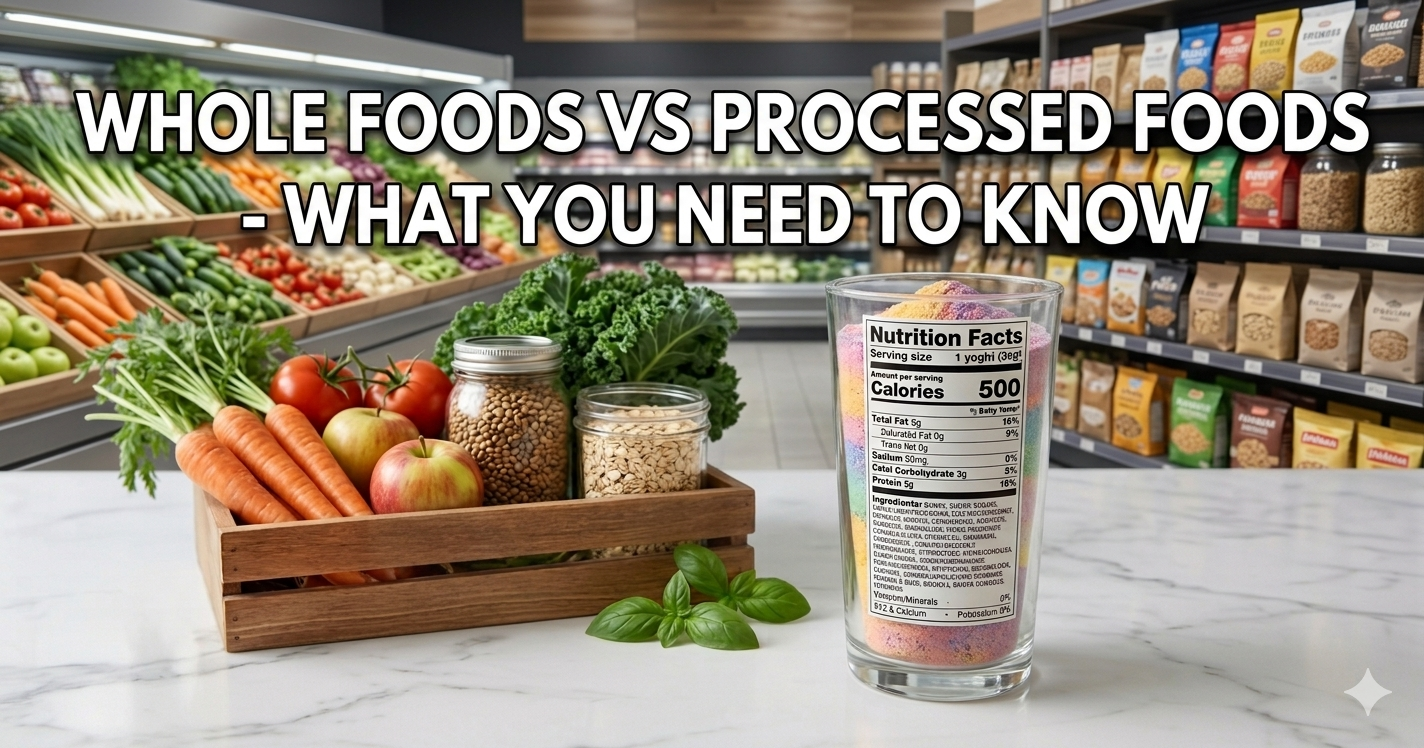
Whole foods include fresh apples, bananas, spinach, brown rice, oats, lentils, almonds, eggs, and fresh chicken. These foods are natural, minimally altered, and free from artificial additives.
Processed foods include packaged chips, white bread, instant noodles, frozen ready meals, sugary drinks, flavoured yoghurts with added sugar, and processed meats like sausages. These items are often designed for convenience but compromise on nutritional quality.
Recognising these differences helps you make better choices during grocery shopping and meal planning.
How Processed Foods Affect Your Health
One of the biggest concerns with processed and packaged foods is their impact on long-term health. These foods are often high in refined sugars, unhealthy fats, and sodium, all of which can negatively affect your body.
Frequent consumption can lead to weight gain, insulin resistance, and increased risk of conditions like diabetes, heart disease, and obesity. Additionally, processed foods can trigger cravings and addictive eating patterns, making it harder to maintain a balanced diet.
This is why understanding whole foods vs processed foods is not just about knowledge; it is about making choices that directly impact your health outcomes.
Benefits of Choosing Whole Foods
Switching to whole foods offers numerous benefits that go beyond weight loss. Whole foods improve digestion due to their high fibre content, support better metabolism, and provide sustained energy throughout the day.
They also help regulate hunger hormones, reducing the likelihood of overeating. Unlike processed foods, which often cause energy spikes and crashes, whole foods promote stable energy levels and improved mental clarity.
Many clients notice visible changes, including improved skin, reduced bloating, and increased stamina after incorporating more whole foods into their diet.
Finding the Right Balance
While whole foods are ideal, eliminating processed foods may not always be practical. The goal is to create a balanced approach in which whole foods make up the majority of your diet and processed foods are consumed occasionally and mindfully.
Understanding what are whole foods and how they compare to processed options helps you build a sustainable eating pattern rather than following restrictive diets.
Small changes, such as replacing sugary snacks with fruits or switching from refined grains to whole grains, can make a significant difference over time.
How Q Slim Fitness Studio Supports Your Nutrition Journey
Adopting healthier eating habits can feel overwhelming, especially with so much conflicting information available. That is why expert guidance is crucial.
At Q Slim Fitness Studio, we create personalised nutrition plans that focus on the right balance between whole foods and processed foods. Our approach is practical, sustainable, and tailored to your lifestyle, ensuring long-term success rather than short-term results.
We help you understand food choices, plan meals effectively, and make smarter decisions that align with your health goals.
Making Smarter Food Choices Every Day
Understanding the difference between whole foods vs processed foods is the first step toward better health. The choices you make daily, whether at the grocery store or during meals, have a lasting impact on your body and overall well-being. By prioritising whole foods and limiting processed and packaged foods, you can improve your nutrition, maintain a healthy weight, and feel more energetic throughout the day. With the right knowledge and support, healthy eating becomes a lifestyle rather than a challenge.
