





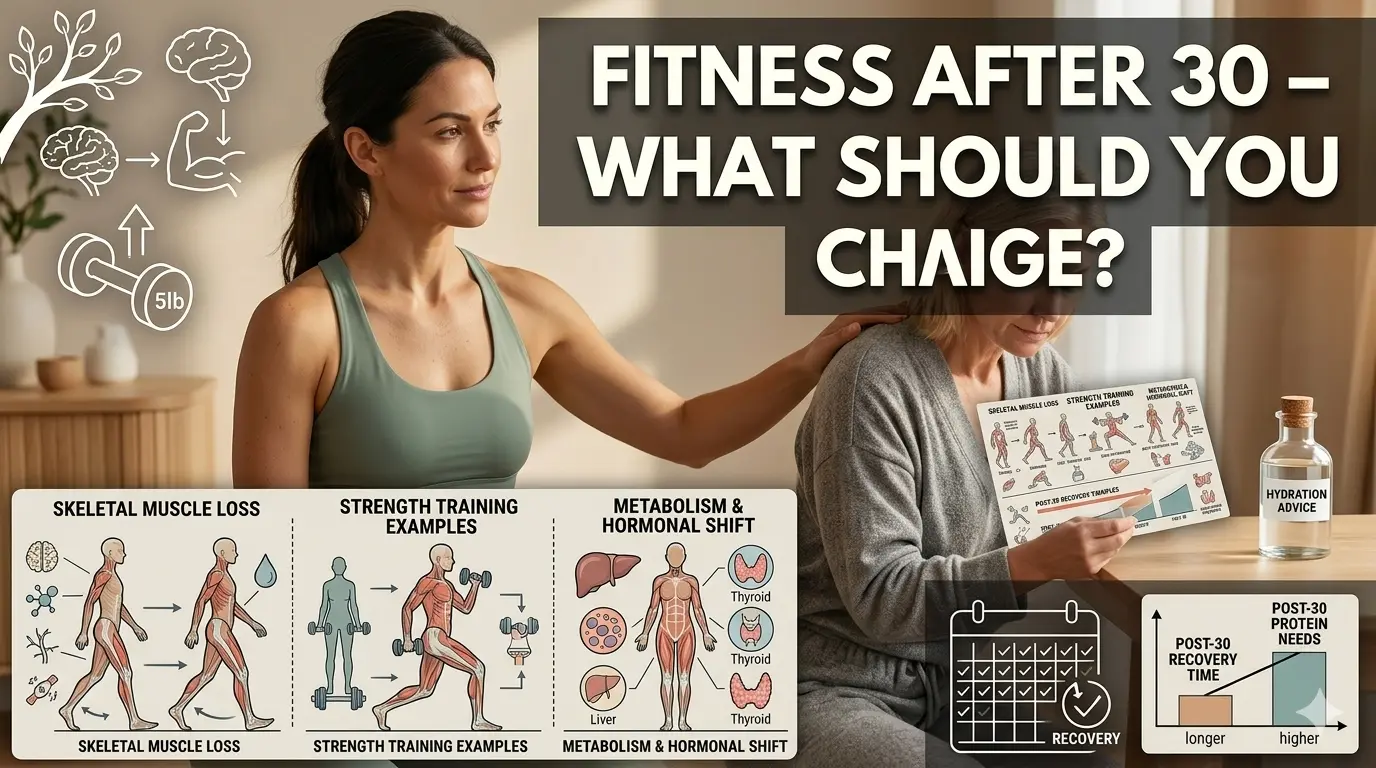
Crossing 30 often brings a shift in how your body responds to exercise, recovery, and nutrition. Many people are starting to question their routines and ask what truly works now. At Q Slim Fitness Studio, we regularly guide clients through this transition, helping them understand that fitness after 30 is not about doing less; it’s about doing things smarter.
Your metabolism, muscle recovery, hormonal balance, and lifestyle responsibilities all evolve with age. The key is to adapt your approach so your body continues to perform, recover, and improve without burnout or injury.
Why Fitness Needs to Evolve After 30
In your twenties, your body is generally more forgiving. You can recover faster, tolerate irregular routines, and still maintain results. However, after 30, subtle physiological changes begin to occur.
Muscle mass gradually declines if not actively maintained, metabolism slows slightly, and recovery takes longer. This doesn’t mean you can’t get stronger or leaner; it simply means your strategy needs to be more intentional.
Understanding getting fit after 30 starts with accepting that your routine should evolve rather than remain static.
Strength Training Becomes Non-Negotiable
One of the most important changes in fitness after 30 is prioritising strength training. Muscle is a metabolically active tissue, and maintaining it helps support metabolism, posture, and overall strength.
Instead of focusing only on cardio, incorporating resistance training at least three to four times a week becomes essential. This includes bodyweight exercises, free weights, or machine-based workouts.
Strength training also plays a critical role in bone density, which becomes increasingly important as you age. A well-structured program ensures you’re not just burning calories but building a stronger, more resilient body.
Cardio Needs to Be Smarter, Not Longer
Cardio is still important, but the approach should change. Long, excessive cardio sessions can sometimes lead to fatigue and muscle loss if not balanced properly.
A mix of moderate-intensity steady-state cardio and shorter, high-intensity sessions tends to work better. This improves cardiovascular health without compromising recovery.
When considering what workout plan should i follow after age 30, the answer is not more cardio, but better-balanced training that includes both strength and cardiovascular work.
Recovery Becomes Just as Important as Training
One of the biggest shifts in getting fit after 30 is understanding recovery. Your body no longer bounces back as quickly as it once did, which makes rest and recovery essential components of your routine.
Sleep quality directly affects muscle repair, hormone regulation, and energy levels. Ignoring recovery can lead to fatigue, plateaued progress, or even injury.
Active recovery methods like stretching, mobility work, and low-intensity movement can help maintain consistency without overloading the body.
Nutrition Needs More Precision
After 30, nutrition plays an even bigger role in results. You may notice that eating habits that once worked no longer deliver the same outcomes.
Protein intake becomes especially important to preserve muscle mass. Balanced meals that include healthy fats, complex carbohydrates, and micronutrients support overall health and energy.
At Q Slim Fitness Studio, we often emphasise that fitness after 30 is driven as much by nutrition as it is by exercise. Small inconsistencies in diet can have a larger impact compared to your twenties.
Hormonal Changes and Their Impact
Hormonal balance starts to shift gradually after 30, affecting energy levels, fat distribution, and recovery. Stress hormones like cortisol can have a greater influence, especially with busy work schedules and lifestyle demands.
This is why overly aggressive training or extreme dieting can backfire. Instead, a balanced approach that supports hormonal health leads to more sustainable results.
Understanding these changes helps answer what workout plan should i follow after age 30 in a way that aligns with my body rather than working against it.
Consistency Over Intensity
Another key principle of getting fit after 30 is prioritising consistency over intensity. Extreme workout routines or crash fitness plans may deliver short-term results but are difficult to sustain.
A realistic routine that fits your lifestyle will always outperform an intense plan that leads to burnout. Even moderate, consistent effort can produce significant long-term improvements.
This approach also reduces the risk of injury, allowing you to stay active and committed over time.
Mobility and Flexibility Should Not Be Ignored
Mobility often gets overlooked, but it becomes increasingly important as you age. Tight muscles, reduced flexibility, and poor movement patterns can lead to discomfort or injury.
Incorporating mobility exercises, stretching, and functional movement training ensures your body remains agile and pain-free. This supports better performance in both workouts and daily activities.
When planning fitness after 30, mobility is not an add-on; it’s a necessity.
Managing Stress and Lifestyle Factors
Fitness is no longer just about workouts. Work stress, sleep patterns, and daily routines all influence your results.
High stress levels can impact weight, recovery, and overall health. Managing stress through physical activity, mindfulness, or structured routines becomes an essential part of your fitness journey.
A well-rounded approach ensures that your efforts in the gym translate into real, sustainable outcomes.
Building a Sustainable Fitness Routine
The ultimate goal of fitness after 30 is sustainability. Your routine should support your long-term health, not just short-term aesthetics.
This means creating a plan that balances strength training, cardio, recovery, and nutrition while fitting into your daily life. It should feel challenging but achievable, structured but flexible.
If you’ve been wondering what workout plan should i follow after age 30, the answer lies in personalisation. There is no one-size-fits-all approach, but there is a smarter, more strategic way to train.
A Smarter Way to Approach Fitness
Getting fit after 30 is not about limitations; it’s about optimisation. With the right approach, you can build strength, improve endurance, and feel better than ever.
Your body is still capable of transformation, but it responds best to thoughtful, consistent effort. By understanding how your needs evolve, you can create a routine that delivers results without compromising your health.
The goal is not just to stay fit, but to stay fit for life.
