






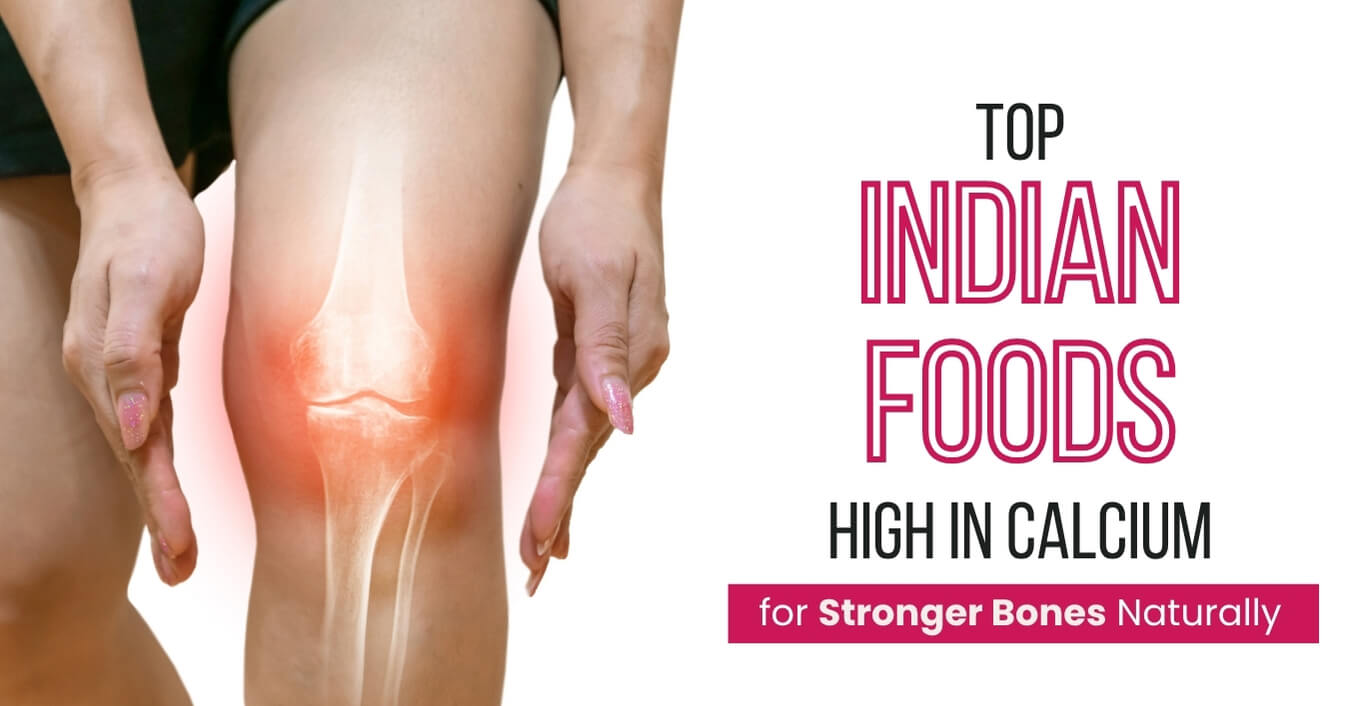
Calcium is not just important for strong bones. It also helps your muscles work well, supports your nerves, and keeps your heart healthy. In India, many people, especially women, older adults, and those who don’t eat dairy, don’t get enough calcium. The good news is that many common Indian foods have plenty of calcium to help you meet your daily needs without taking supplements.
In this blog, we will talk about why calcium matters, how much you need every day, and which Indian foods are the best sources. We will also share tips to help your body absorb calcium better.
🦴 Why Calcium is Important for Everyone
Calcium is needed at every stage of life. Whether you are a child, an adult, or a senior, calcium helps you:
- Keep your bones strong and avoid fractures
- Maintain healthy teeth
- Help your muscles contract properly
- Support nerve functions
- Keep your heart and blood clotting working well
As you get older, your body finds it harder to absorb calcium. So, it is very important to get enough calcium from food, especially if you are above 40 or post-menopausal.
🥛 How Much Calcium Do You Need Every Day?
According to the Indian Council of Medical Research (ICMR), the daily calcium needs are:
| Who | Calcium Needed (mg/day) |
| Adults | 1000 |
| Women over 50 & Men over 65 | 1200 |
| Teenagers | 1300 |
| Pregnant or Breastfeeding Women | 1200 to 1500 |
🥗 Top Indian Foods High in Calcium
Here are some popular Indian foods that contain good amounts of calcium:
- Ragi (Nachni)
Ragi has one of the highest amounts of calcium. Just 100 grams of ragi gives about 344 mg of calcium. You can eat it as roti, dosa, or porridge. - Sesame Seeds (Til)
One teaspoon of sesame seeds provides about 88 mg of calcium. You can sprinkle roasted sesame seeds on your vegetables, rotis, or add them to ladoos. - Milk and Dairy Products
- One glass of milk has about 300 mg of calcium.
- One bowl of curd has about 250 mg.
- 100 grams of paneer contains around 200 mg.
If you are okay with dairy, include these in your daily meals.
- Green Leafy Vegetables
Vegetables like fenugreek (methi), spinach (palak), bathua, and amaranth (chaulai) are rich in calcium. Cook them with little oil and add some lemon juice to help your body absorb calcium better. - Tofu and Soy Products
Tofu contains 300 to 350 mg of calcium per 100 grams. It is a good choice for vegetarians. Use tofu in stir-fries, bhurji, or wraps. - Rajma, Chana, and Other Pulses
Rajma has about 130 mg of calcium per 100 grams, while chana has about 150 mg. Including different dals like chana dal, urad dal, moong dal, and masoor dal also helps. - Almonds
Eating ten almonds gives you about 75 mg of calcium. You can soak almonds overnight and eat them or add almond paste to milk or smoothies. - Drumstick Leaves (Moringa)
These leaves are very rich in calcium, iron, and vitamin A. You can use them in chutneys or stir-fried dishes. - Millets (Bajra and Jowar)
Millets provide moderate amounts of calcium, about 40 to 60 mg per 100 grams. They are a good alternative to wheat and help in strengthening bones.
🍋 Tips to Help Your Body Absorb Calcium
Eating calcium-rich foods is important, but your body also needs to absorb calcium well. Here are some tips:
- Get enough Vitamin D: Spend 20 to 30 minutes in sunlight daily or eat foods fortified with vitamin D.
- Avoid too much tea and coffee: Caffeine can reduce calcium absorption.
- Eat Vitamin C rich foods: Adding lemon, amla, or oranges with your calcium foods helps absorption.
- Soak and sprout pulses: This reduces substances like phytates that block calcium absorption.
📋 Sample One-Day Calcium-Rich Indian Diet Plan
| Meal | Food Items | Approx. Calcium (mg) |
| Early Morning | Warm lemon water and 5 soaked almonds | 75 |
| Breakfast | Ragi dosa with coconut chutney and 1 glass of milk | 400 |
| Mid-Morning | 1 banana or orange | 25 to 50 |
| Lunch | Palak dal, brown rice, curd, sesame (til) chutney | 300 |
| Evening Snack | Roasted chana and herbal tea | 80 |
| Dinner | Bajra roti, tofu bhurji, mixed vegetable sabzi | 250 |
| Total | ~1130 to 1150 mg |
💡 Simple Tips for Indian Families
- Use ragi, bajra, or jowar instead of maida in rotis and baking.
- Make your own sesame seed chutney instead of store-bought sauces.
- Prepare fresh paneer at home using lemon juice.
- Add greens like methi to parathas, theplas, or mixed dals.
- Make healthy laddoos with sesame seeds and jaggery for tasty snacks.
🧓 Why Calcium is Extra Important for Older Adults
As we age, bones become weaker and chances of fractures increase. A diet rich in calcium, along with walking and sun exposure, helps keep bones strong and healthy.
Our nutrition experts at Q-Slim Fitness Studio can help you create a meal plan that fits your age and health needs to support your bones and overall health.
👉 Book a Consultation with Our Nutritionist
❓ Frequently Asked Questions (FAQs)
Q1. Which Indian foods have the most calcium?
A: Ragi, sesame seeds, rajma, chana, almonds, dairy products like milk and paneer, green leafy vegetables, and tofu are some of the best sources.
Q2. What food has the highest calcium?
A: Ragi (nachni) has the highest calcium content with about 344 mg per 100 grams, followed by sesame seeds and dairy.
Q3. How can I get 1000 mg of calcium daily in India?
A: You can combine ragi dosa, a glass of milk, curd, sesame chutney, green vegetables, and dal to meet your calcium needs naturally.
Q4. Which dal is richest in calcium?
A: Chana dal has higher calcium compared to some other dals. Including a variety of dals like moong, masoor, and urad helps too.
