






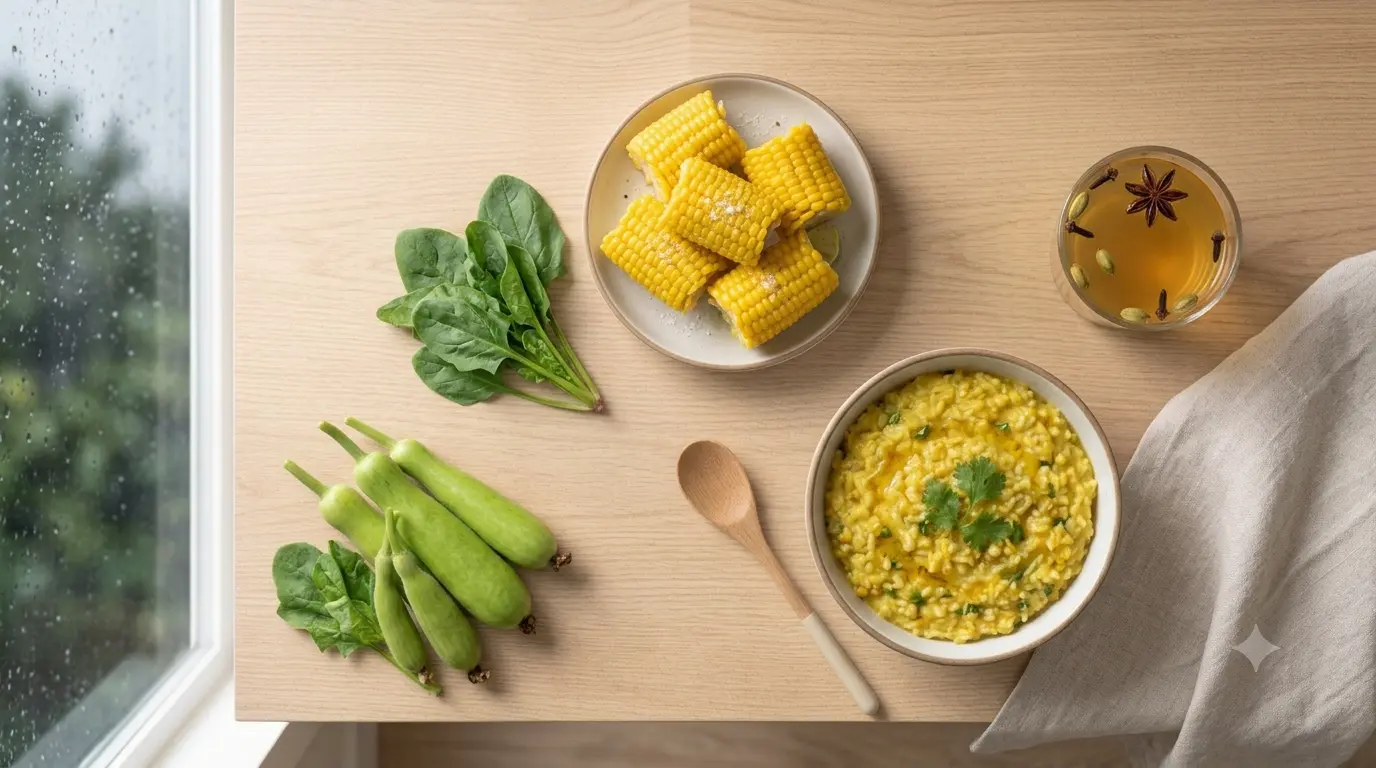
TL;DR – Monsoon slows digestion, raises the risk of waterborne infections, and puts extra pressure on immunity, which is why a well planned monsoon diet makes such a noticeable difference. Favouring warm cooked meals, immunity supportive spices like ginger and turmeric, bitter vegetables, and probiotic foods while avoiding raw salads, street food, excess fried snacks, and sugary drinks covers most of what the body needs. Staying consistently hydrated, even when thirst signals feel weaker, rounds out a practical, sustainable monsoon routine.
The Full Breakdown
The monsoon brings relief from the heat, but it also brings a sharp rise in digestive issues, colds, fungal infections, and low energy. Humidity slows digestion, water sources are more likely to carry contamination, and the body’s natural defence systems work harder than usual. A well planned monsoon season diet is one of the simplest ways to stay well through the rains without falling back on medication every few weeks.
At Q Slim Fitness, clients are guided through seasonal eating changes every year, and monsoon is one of the periods where small dietary shifts make the biggest difference. This blog breaks down what a smart monsoon diet actually looks like, the foods worth adding, and the ones worth avoiding until the season passes.
Why the Body Struggles More During Monsoon
Digestive fire, often described as a slower metabolic rate during humid weather, tends to weaken during the rains. Humidity also raises the risk of waterborne and foodborne infections, while fluctuating temperatures put extra pressure on immunity. This combination is why so many people notice bloating, indigestion, frequent colds, or fatigue every monsoon.
Understanding this helps explain why certain monsoon diet foods work better than others during this specific window of the year.
Foods to Eat During the Monsoon Season
Certain foods make it easier for the body to stay strong and comfortable through the monsoon. These monsoon diet foods support digestion, keep immunity steady, and reduce the chance of picking up seasonal infections.
1. Warm Freshly Cooked Meals
Warm, freshly cooked meals are easier to digest than cold or leftover food during humid weather. Soups, dals, and lightly spiced sabzis served hot help keep digestion steady and reduce bloating.
2. Seasonal Fruits Like Pears, Pomegranate, and Litchi
Seasonal fruits such as pears, pomegranate, and litchi are rich in antioxidants and vitamin C, both of which support immunity. Washing and peeling fruit thoroughly during monsoon further reduces contamination risk.
3. Ginger, Turmeric, and Black Pepper
Ginger, turmeric, and black pepper all have natural anti-inflammatory and antimicrobial properties. Adding them to daily cooking, teas, or a warm kadha can support digestion and help the body fight off seasonal infections.
4. Bitter Vegetables Such as Bitter Gourd and Neem
Bitter vegetables like bitter gourd and neem are traditionally used during monsoon to support digestion and help regulate blood sugar. They also have properties that may help the body resist common monsoon infections.
5. Probiotic Foods Like Curd and Fermented Foods
Curd and other fermented foods support gut health, which plays a direct role in immunity. A healthy gut microbiome makes it easier for the body to fend off the infections that are more common during the rains.
6. Warm Herbal Teas and Kadha
Herbal teas and kadha made with ginger, tulsi, and black pepper are a simple way to stay warm, support digestion, and give the immune system a boost during the monsoon months.
Foods to Avoid During Monsoon
Just as important as what to eat is knowing what to limit. These foods are more likely to cause digestive upset or increase infection risk during the rains.
1. Raw Salads and Uncooked Leafy Greens
Raw salads and uncooked leafy greens are more likely to carry contamination during monsoon, since moisture and humidity make it easier for bacteria to grow. Lightly cooked or steamed vegetables are a safer choice for this season.
2. Street Food and Cut Fruits Sold Outdoors
Street food and pre-cut fruit sold outdoors carry a higher risk of contamination during monsoon, since exposure to humidity and rainwater accelerates bacterial growth. Freshly prepared food at home is a far safer option.
3. Excess Fried and Oily Snacks
Fried and oily snacks are harder to digest when digestive fire is already running slower during humid weather. Keeping fried food occasional rather than a daily habit helps avoid the bloating and sluggishness many people notice in monsoon.
4. Carbonated and Sugary Drinks
Carbonated and sugary drinks can interfere with digestion and offer little support to the immune system. Warm water, herbal teas, and fresh coconut water are better choices during the rains.
5. Seafood During Peak Monsoon
Seafood is best limited during peak monsoon, since this is typically breeding season and the risk of contamination is higher. Choosing other protein sources during these months is a simple way to reduce risk.
Hydration During the Rains
It is easy to drink less water during monsoon simply because the weather feels cooler, but the body still needs consistent hydration to support digestion, circulation, and immunity. Warm water, herbal teas, and soups all count toward daily fluid intake and are gentler on digestion than cold drinks.
Staying hydrated also supports the skin and helps flush out toxins more efficiently, which becomes especially important when the body is working harder to fight off seasonal infections.
Building a Practical Monsoon Routine
A sustainable monsoon routine does not need to be complicated. Favouring home cooked, warm meals, keeping a stock of immunity supportive spices like ginger and turmeric, choosing seasonal fruit over cut fruit sold outdoors, and staying consistent with hydration covers most of what the body needs through the rains.
Small, consistent choices made across the season add up to noticeably fewer colds, less digestive discomfort, and steadier energy through what can otherwise be a difficult few months.
Why This Matters for You
Monsoon illness is common, but it is not inevitable. Most of the digestive upset, colds, and fatigue people associate with the rainy season can be reduced significantly through thoughtful food choices. A monsoon diet built around warm, freshly cooked meals, immunity supportive spices, and good hydration gives the body a real advantage through the season.
Ready to Build a Diet That Works With Every Season, Not Against It?
At Q Slim Fitness Studio, Pallavi Srivastava helps clients build eating habits that adapt to the season rather than working against it, so results hold steady all year round, not just when the weather cooperates.
The program includes:
1. Personalised Diet Plans
2. Seasonal Nutrition Guidance
3. Regular Progress Tracking
4. One on One Consultations
5. Lifestyle and Habit Coaching
6. Ongoing Support and Adjustments
To start building a diet that keeps you well through every season, call +91 9773111531 or email qslimfitness@gmail.com.
