






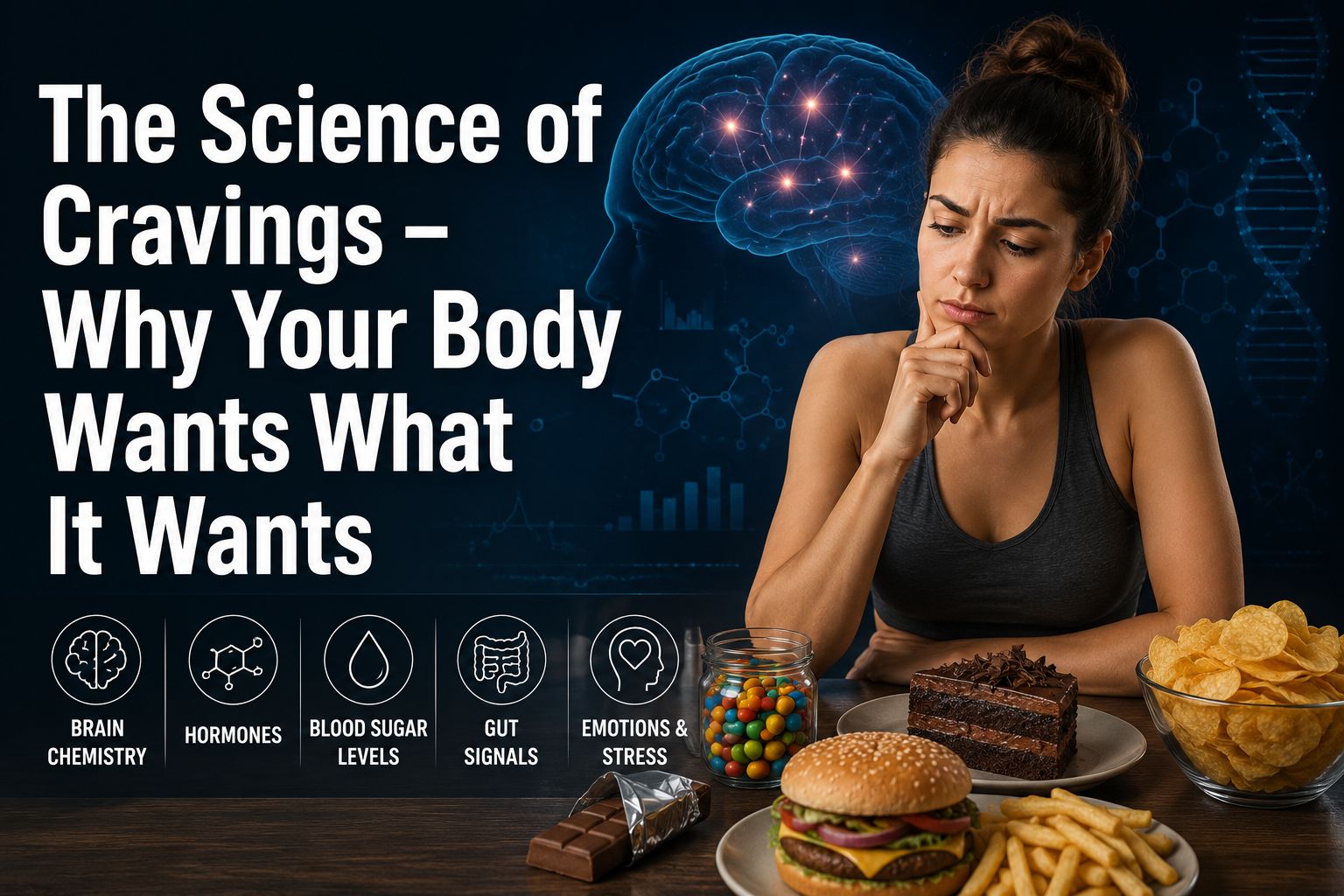
Cravings often feel random, intense, and difficult to control. One moment you’re fine, and the next, you’re thinking about something specific, sweet, salty, or high in carbs. At Q Slim Fitness Studio, we frequently help clients understand that cravings are not a lack of discipline. They are signals driven by biology, psychology, and lifestyle patterns. The science of cravings reveals that your body is constantly communicating its needs, even if those signals sometimes feel confusing.
Understanding what causes cravings can help you respond intelligently instead of reacting impulsively.
What Are Cravings, Really?
Cravings are strong desires for specific foods, often tied to energy needs, nutrient imbalances, or emotional triggers. Unlike general hunger, cravings are targeted. You may not feel hungry overall, but you strongly want a particular type of food.
To understand how cravings work, it’s important to recognise that they are controlled by a combination of brain chemistry, hormones, and learned behaviours. Your brain associates certain foods with pleasure, quick energy, or comfort, and it uses cravings as a way to guide your choices.
The Role of the Brain and Reward System
A major part of the science of cravings lies in the brain’s reward system. When you eat foods high in sugar, fat, or salt, your brain releases dopamine, a neurotransmitter linked to pleasure and reward.
Over time, your brain starts associating these foods with positive feelings. This creates a feedback loop where the brain begins to anticipate the reward, triggering cravings even before you eat.
This is one of the key reasons for cravings that feel almost automatic. It’s not just about taste, it’s about how your brain has been conditioned to respond.
Blood Sugar Fluctuations and Energy Needs
One of the most common answers to what causes cravings is unstable blood sugar levels. When your blood sugar drops, your body seeks quick energy sources, often in the form of sugary or refined carbohydrate foods.
This is why cravings for sweets or processed snacks tend to appear when meals are skipped or not balanced properly. Rapid spikes and crashes in blood sugar create a cycle that reinforces cravings.
Understanding how cravings work from a metabolic perspective shows that consistent, balanced meals can significantly reduce these urges.
Hormones That Influence Cravings
Hormones play a powerful role in when do you get cravings. Ghrelin, known as the hunger hormone, increases appetite, while leptin signals fullness. Imbalances between these hormones can intensify cravings.
Stress hormones like cortisol also contribute. When stress levels are high, the body often craves high-energy, comfort foods. This is a survival mechanism, as the body prepares for perceived threats by seeking quick fuel.
In women, hormonal fluctuations during the menstrual cycle can also affect cravings, particularly for carbohydrates and sweet foods.
Emotional and Psychological Triggers
Not all cravings are physical. Emotional triggers are a significant part of the science of cravings. Stress, boredom, anxiety, or even habit can create strong desires for certain foods.
For example, if you regularly eat snacks while watching TV, your brain begins to associate that activity with food. Over time, simply sitting down to watch something can trigger a craving, regardless of actual hunger.
These patterns explain many reasons for cravings that seem unrelated to physical needs.
Sleep and Its Impact on Cravings
Sleep is one of the most overlooked factors in what causes cravings. Poor sleep disrupts hunger hormones, increasing ghrelin and decreasing leptin. This imbalance leads to increased appetite and stronger cravings, especially for high-calorie foods.
Lack of sleep also reduces impulse control, making it harder to resist cravings when they arise. This is why people often crave unhealthy foods after a night of poor sleep.
Understanding when do you get cravings often reveals a strong link to sleep quality and daily routines.
Nutrient Deficiencies and Cravings
Sometimes, cravings can be linked to nutrient deficiencies. While not always direct, the body may signal a need for certain nutrients through cravings.
For example, low magnesium levels have been associated with chocolate cravings, while low sodium levels may lead to cravings for salty foods. Although cravings are not always precise indicators, they can sometimes reflect underlying nutritional needs.
This adds another layer to the science of cravings, showing that your body may be seeking balance rather than just indulgence.
Habit Formation and Environmental Cues
Your environment plays a major role in how cravings work. Repeated exposure to certain foods, smells, or routines can create strong associations that trigger cravings.
Seeing or smelling food can activate the brain’s reward system, even if you are not physically hungry. Over time, these cues become powerful triggers that influence your behaviour.
Understanding these patterns helps explain reasons for cravings that seem to come out of nowhere.
When Do You Get Cravings the Most?
If you track your patterns, you’ll notice that cravings tend to appear at specific times. Mid-afternoon energy dips, late-night boredom, or post-meal sugar habits are common triggers.
Answering when do you get cravings often reveals predictable patterns linked to your routine, meal timing, and energy levels. Recognising these patterns is the first step toward managing them effectively.
How to Respond to Cravings Intelligently
The goal is not to eliminate cravings but to understand and manage them. Balanced meals that include protein, fibre, and healthy fats help stabilise blood sugar and reduce sudden urges.
Staying hydrated, maintaining consistent sleep, and managing stress all play a role in controlling cravings. Being mindful of your habits and environment can also reduce unnecessary triggers.
At Q Slim Fitness Studio, we guide clients to work with their bodies rather than against it. When you understand the science of cravings, you stop seeing them as a problem and start seeing them as information.
A Smarter Perspective on Cravings
Cravings are not a sign of weakness; they are a reflection of how your body and brain function. By understanding what causes cravings, you gain the ability to respond with awareness instead of impulse.
Whether driven by hormones, habits, or energy needs, cravings are part of being human. The key is learning how to interpret them correctly. When you truly understand how cravings work, you take control of your choices in a way that feels sustainable, balanced, and aligned with your health goals.
