





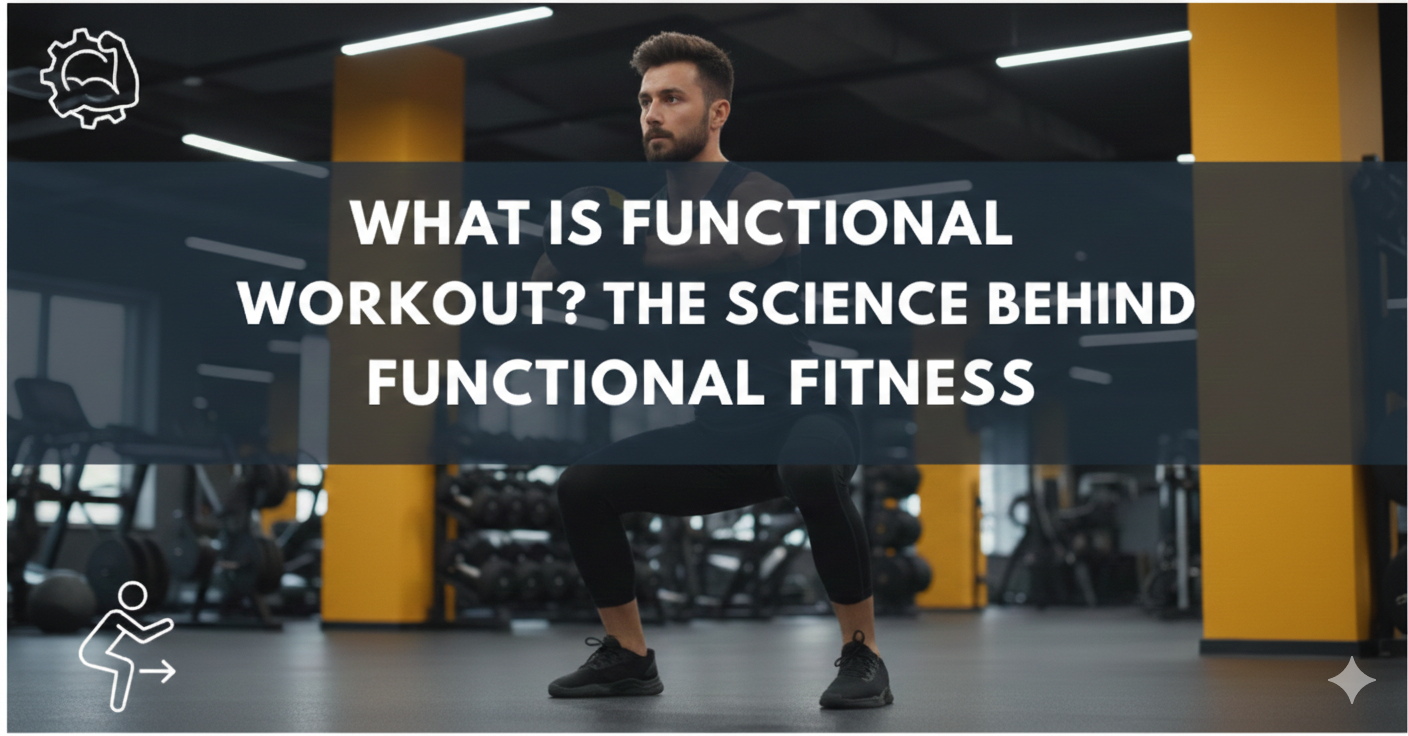
In the evolving world of health and wellness, fitness is no longer just about lifting heavier weights or spending long hours on cardio machines. The focus has shifted toward training the body in a way that supports real-life movement. This is where functional fitness comes in. At Q Slim Fitness Studio, the approach to training often centres around sustainable, science-backed movement patterns that improve strength, mobility, and overall well-being rather than chasing short-term results. Understanding what is functional workout is and the science behind it, can completely change the way we look at exercise.
Functional fitness is not a trend. It is rooted in biomechanics, physiology, and the natural way the human body is designed to move. Instead of isolating muscles, functional training highlights coordinated, multi-joint movements that mirror everyday activities such as bending, lifting, pushing, pulling, rotating, and walking.
What Is Functional Workout?
To understand what is functional workout, it helps to think about how we move in daily life. Every time we climb stairs, pick up groceries, sit down, or reach overhead, multiple muscles and joints work together in a coordinated manner. A functional workout trains these patterns rather than focusing on a single muscle group at a time.
Traditional gym routines often isolate muscles using machines, such as leg extensions or bicep curls. While these exercises build strength, they may not always translate into improved real-world movement. Functional training, on the other hand, improves movement efficiency by strengthening the body as a system.
Scientifically, functional workouts improve neuromuscular coordination. This means your brain and muscles communicate more effectively, leading to better balance, stability, and reaction time. These workouts often involve compound movements, bodyweight exercises, free weights, resistance bands, and stability tools that challenge posture and core control.
The Science Behind Functional Fitness
The science of functional fitness lies in how the body adapts to movement patterns. According to the principle of specificity in exercise science, the body adapts specifically to the demands placed upon it. If training mimics real-life movements, the body becomes better at performing those movements efficiently.
Functional workouts typically engage multiple muscle groups across different planes of motion. The human body moves in three planes: sagittal (forward and backwards), frontal (side to side), and transverse (rotational). Many traditional workouts focus heavily on the sagittal plane. Functional fitness integrates all three, improving overall movement quality.
Another scientific principle involved is core stabilisation. Almost every functional movement requires core engagement. The core is not just the abdominal muscles but includes deep stabilisers such as the transverse abdominis and multifidus. When these muscles are activated consistently through functional exercises, posture improves, and the risk of injury decreases.
Functional training also enhances proprioception, which is the body’s awareness of its position in space. Improved proprioception leads to better balance and coordination, especially important as we age.
Why Is Functional Fitness Important?
When people ask why functional fitness is important, the answer goes beyond aesthetics or weight loss. Functional fitness supports long-term physical independence. It helps maintain mobility, reduces injury risk, and improves daily performance.
Modern lifestyles involve long hours of sitting, limited movement, and repetitive patterns. This can lead to muscle imbalances, stiffness, and reduced joint mobility. Functional workouts counteract these issues by strengthening weak muscles and improving joint stability.
Functional fitness is especially valuable for individuals managing weight or metabolic concerns. Because these workouts engage multiple muscle groups simultaneously, they increase overall energy expenditure and improve muscle mass. Higher muscle mass contributes to better metabolic efficiency, which supports fat loss and blood sugar regulation.
At Q Slim, functional training is often integrated into fitness programs to ensure that clients not only lose weight but also move better, feel stronger, and build resilience in their bodies. This holistic approach highlights that functional workout benefits extend far beyond physical appearance.
Functional Workout Benefits
Functional workout benefits can be seen in both short-term and long-term outcomes. In the short term, individuals often notice improved balance, coordination, and stamina. Over time, the deeper benefits become more evident.
One of the most important benefits is injury prevention. Because functional workouts strengthen stabilising muscles and improve joint alignment, they reduce strain on vulnerable areas like the lower back, knees, and shoulders.
Another significant benefit is improved posture. Many people suffer from rounded shoulders, tight hips, and weak glutes due to sedentary habits. Functional exercises correct these imbalances by promoting proper alignment and muscle activation.
Functional training also enhances flexibility and mobility. Unlike static stretching alone, functional movements strengthen muscles through a full range of motion. This dynamic strengthening improves both flexibility and control.
From a metabolic standpoint, functional workouts often combine strength and cardiovascular elements, which can improve heart health and insulin sensitivity. These functional workout benefits make it a powerful tool for overall wellness.
Functional Workout for Beginners
For someone new to fitness, the idea of compound movements and multi-joint exercises may seem intimidating. However, functional workout for beginners can be simple and accessible.
The key is to start with basic movement patterns. Bodyweight squats, controlled lunges, wall push-ups, hip bridges, and step-ups are all examples of beginner-friendly functional movements. These exercises mimic everyday actions and can be performed with proper form before progressing to added resistance.
The emphasis for beginners should always be on movement quality rather than intensity. Learning correct posture, controlled breathing, and core engagement builds a strong foundation. As strength and coordination improve, resistance bands, light dumbbells, or kettlebells can be introduced gradually.
It is also important to maintain balance in training. A functional workout for beginners should include movements that push, pull, hinge, squat, rotate, and stabilise. This ensures the entire body is trained evenly.
Rest and recovery play a crucial role as well. Because functional workouts engage multiple muscle groups, adequate recovery supports muscle adaptation and prevents overtraining.
Bringing Functional Fitness Into Your Routine
Integrating functional fitness into a routine does not require a complete overhaul. It begins with shifting the mindset from isolated muscle training to movement-based training.
A typical weekly routine can include two to three sessions focused on functional strength. These sessions can combine lower-body and upper-body movements with core stability work. Incorporating balance exercises and rotational movements ensures comprehensive development.
Warm-ups should prepare the body dynamically, focusing on mobility and activation rather than static stretching alone. Cool-down sessions can emphasise controlled breathing and gentle mobility to support recovery.
Consistency is essential. Functional fitness produces results when practised regularly and progressively. Gradually increasing resistance or complexity keeps the body adapting and improving.
A Smarter Approach to Fitness
Understanding what is functional workout changes how we view exercise. Instead of chasing isolated strength gains, functional fitness features coordinated movement, stability, and real-world strength. The science behind it supports improved neuromuscular efficiency, better posture, enhanced metabolic health, and reduced injury risk.
When people ask why is functional fitness important, the answer lies in longevity and quality of life. It prepares the body not just for workouts but for everyday demands. The functional workout benefits extend from improved balance and coordination to stronger muscles and better metabolic health.
A functional workout for beginners can be simple, progressive, and highly effective. With proper guidance and consistency, it becomes a sustainable part of a fitness routine. By focusing on movement patterns and overall body integration, functional fitness offers a smarter and more practical approach to staying strong and healthy for years to come.
